Senegal’s Road to 2026 Starts With a Heavy Tradeoff

As the 2026 FIFA World Cup draws closer, Senegal stands out as a team that no longer plays like an underdog. Head coach Pape Thiaw has spoken with the kind of confidence that once would have sounded outrageous, insisting he would walk away if he ever doubted Senegal could win the tournament.
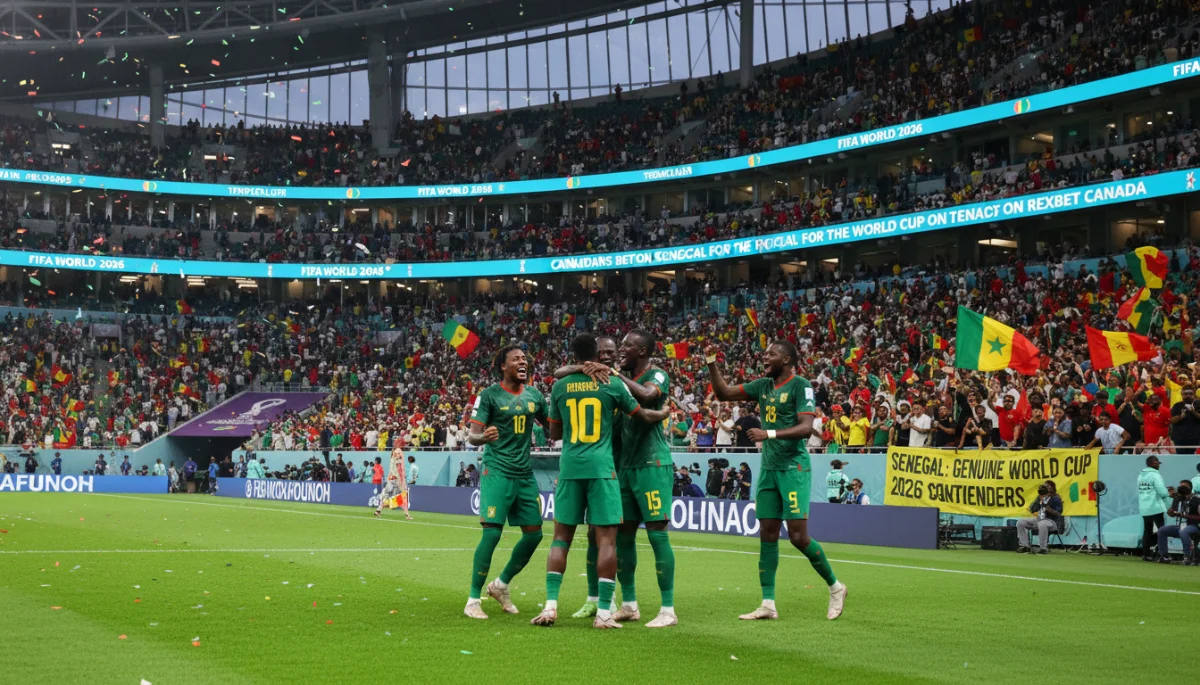
That belief is not being treated as fantasy. Senegal has earned real respect as one of Africa’s most complete national teams, blending veteran leadership, physical power, and a growing pipeline of elite youth talent. For readers tracking the Senegal World Cup 2026 prospects, the case is easy to see: this is a squad with enough quality to trouble anyone. Supporters in Canada can also bet on Senegal for the World Cup on Rexbet Canada, where the appeal is obvious for those looking at a live dark horse with genuine upside.

But Senegal’s success story has another side. Behind the national team’s rise is a system that has been remarkably effective for the top level of the sport while leaving local football with far less than it produces. The result is a model of development that creates stars quickly, yet often drains value away from the country that helped shape them.
A Talent Pipeline Built for Europe
Senegal’s reputation as a talent factory is out of proportion with its population. With roughly 20 million people, the country continues to produce players who can compete with the best from far larger footballing nations. Much of that output comes from academies such as Generation Foot, Diambars, and Dakar Sacre Coeur, which provide strong coaching, education, and medical support before moving players into Europe.
- These academies have become the foundation of Senegal’s modern football success.
- Partnerships with European clubs help young players reach top leagues earlier.
- The model has helped produce stars such as Sadio Mane, Ismaila Sarr, and Pape Matar Sarr.
- The financial rewards, however, often move outward far faster than they return home.
The most striking example is the long-running relationship between Generation Foot and FC Metz, which has helped shape a direct pathway to Europe for more than two decades. That setup has created a dependable stream of talent, but it has also concentrated bargaining power on the European side.
Recent figures make the imbalance harder to ignore. In one look at 13 academy-developed players involved with Senegal’s continental squads, local academies received only €100,000 in initial transfer fees, while the same players were later sold on by European clubs for a combined €81.2 million. Across their careers, those 13 players have generated more than €411 million in transfer activity. In practical terms, Senegal exports football value efficiently, but much of the profit is realized elsewhere.
That gap matters on the ground. Domestic clubs often lack resources, stadiums need work, and the local league struggles for visibility. Even compensation that should flow back through FIFA’s solidarity system can become difficult to collect, including in cases tied to major transfers such as Nicolas Jackson’s move to Chelsea. The structure rewards development, yet it does not always support the environment that made development possible.
The Diaspora Advantage
Senegal has also become far more deliberate in recruiting players from the diaspora. In earlier eras, many dual-national prospects chose stronger European programs and never looked back. Today, the national setup is more organized, more persuasive, and better timed.
The federation now targets players in Western Europe, usually between the ages of 16 and 19, before another national team can lock them in. Family ties, cultural identity, and the chance to join a successful project all play a role. That approach has already delivered players such as Ibrahim Mbaye of PSG and Mamadou Sarr of Chelsea, both of whom previously appeared for France at youth level.
- Senegal reaches prospects early, before international allegiance is finalized.
- Emotional connection to family and heritage remains a major factor.
- A winning senior team makes the sporting pitch stronger.
- New arrivals deepen the squad without slowing the development of local academy graduates.
This mix has made Senegal unusually balanced. The national team can field players shaped entirely at home alongside youngsters developed in Europe but still tied to Senegalese roots. That combination gives the squad flexibility and depth that many African teams cannot match.
What 2026 Could Mean
The 2026 tournament may be the last great chance for Senegal’s most celebrated generation to leave its final signature on world football. Sadio Mane, Kalidou Koulibaly, and Edouard Mendy have all carried the team through its rise, and North America could be the stage where that group defines its legacy.
Senegal’s World Cup path is not simple. Group I brings a difficult set of opponents, including France, Norway, and Iraq, and the opening match against France in New Jersey will be an immediate test of ambition. If Senegal can survive that stage, its combination of tactical discipline, physical intensity, and squad depth makes it dangerous in knockout play.
The reality is straightforward: Senegal has enough quality to dream bigger than ever before. The harder question is whether the country’s football system can eventually share more fairly in the value that dream creates.