Can France or Spain Win the 2026 World Cup? Stats Reveal the Real Chances

Updated Friday, July 10, 2026. The path to the 2026 World Cup trophy has narrowed dramatically following France’s decisive 2-0 victory over Morocco in Boston on Thursday. This result secured Les Bleus a spot in the semifinals, marking the first team through to that stage. By Saturday night, three additional quarterfinal matches will eliminate four more teams, leaving just three semifinalists to compete for the title on July 19. For bettors who hold futures tickets, are considering placing one, or simply want to understand which nation has the strongest probability of winning, this moment represents where statistical analysis becomes far more critical than emotional intuition.
Understanding the Purpose of This Analysis
Predicting a tournament winner differs significantly from betting on a single match, and this distinction attracts a specific type of wagerer who values long-term data over short-term excitement. The primary audience includes futures bettors who placed outright bets on a team before the tournament began and now need to assess whether their ticket requires a hedge to protect their investment. Value hunters also form a key part of this group, as they seek discrepancies between what statistical models predict and what the market odds currently offer, looking for spots where the numbers do not align with the public sentiment.
Individual award trackers focus on markets like the Golden Boot, monitoring top goalscorers alongside team performance, while parlay builders look to combine Saturday’s two quarterfinal matches into a single-day multi-bet to increase their potential payout. Finally, hedge bettors who secured a win-all ticket months ago may feel compelled to lock in guaranteed profit as the field of contenders narrows, prioritizing financial security over the outcome of future matches regardless of how well their team performs.
The Statistical Landscape of Remaining Contenders
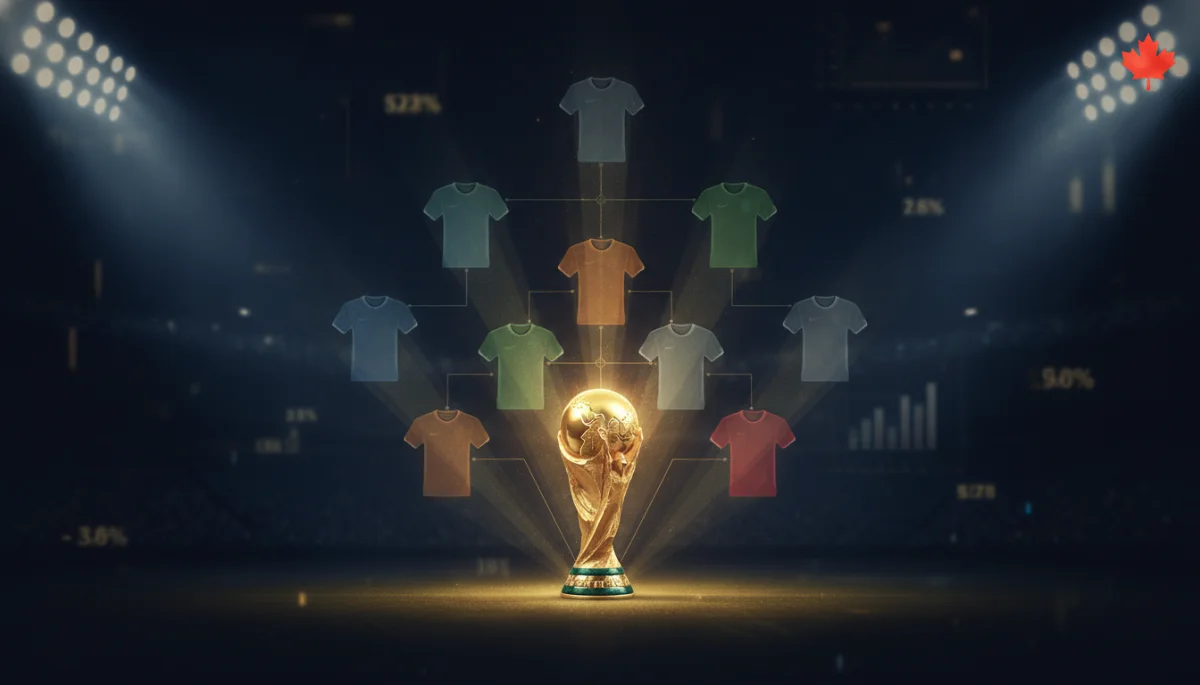
Three distinct measurement systems are currently tracking the seven remaining teams, providing a comprehensive view of the tournament landscape. A statistical simulation model, known as the Squawka Signal Model, offers one perspective, while two prediction-market platforms, Polymarket and Kalshi, provide alternative views based on real-time betting activity. These systems do not always agree, and the resulting disagreement creates the market inefficiencies that skilled bettors look for to find value.
France currently leads the field with the highest probability across all three systems. The Squawka Signal Model assigns France a 26.1 percent chance, while Polymarket and Kalshi show even higher confidence at 32.8 percent and 33.9 percent respectively. Spain follows closely as the only team with a comparable statistical chance, with the model assigning them 25.4 percent, though the prediction markets place them significantly lower at 18.6 percent and 18.8 percent. This gap between the model’s assessment and the market’s pricing represents the most significant inefficiency in the current tournament, suggesting that Spain may be undervalued by the betting public compared to their underlying performance data.
England holds a solid third position with the model granting them a 15.7 percent chance, which aligns almost perfectly with the prediction markets at 15.6 percent for both platforms. Argentina presents another interesting divergence, as the prediction markets value them higher at 18.9 percent compared to the model’s 13.7 percent, indicating that the betting crowd believes the defending champions have more potential than the statistical simulation suggests. The remaining teams, including Belgium, Norway, Switzerland, and the eliminated Morocco, have significantly lower probabilities, with Belgium at 7.0 percent from the model but only 2.4 percent on Polymarket, highlighting how the market has sharply discounted the European team’s chances.
Nate Silver’s PELE simulation model, which runs 100,000 simulated tournament scenarios, reinforces the narrative that Argentina and Spain were the pre-tournament co-favorites, with France joining them as a favorite only after the knockout rounds began. This model has flagged Argentina’s rating as declining through the tournament despite the defending champions maintaining their results, noting that their path forward is distinctly beatable. This suggests that a team can continue winning matches while their underlying performance data raises questions about the sustainability of their success, a crucial insight for bettors assessing long-term viability.
France Secures Their Semifinal Spot
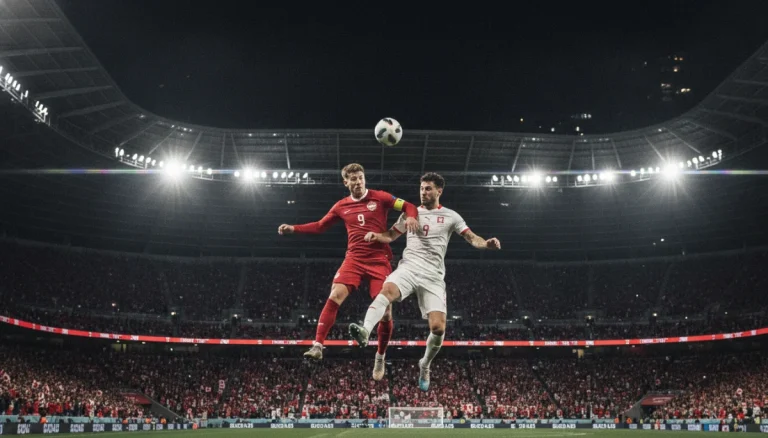
France’s 2-0 victory against Morocco did more than just eliminate a strong opponent; it reinforced the consistent narrative that has surrounded Les Bleus throughout the entire tournament. The team won without conceding a goal, extending their knockout-stage run where they have yet to lose a goal in two consecutive matches. Kylian Mbappé opened the scoring, moving him into the lead for the Golden Boot award and proving that France’s most dangerous attacker is delivering when it matters most. This profile of winning comfortably, not conceding, and scoring through their star player is exactly what bookmakers and statistical models favor, confirming France as the team to beat.
The Decisive Weekend Matches
Three matches scheduled over two days will determine the final four teams that will compete for the championship. Spain faces Belgium on Friday at SoFi Stadium in Los Angeles, where Spain enters as the heavy favorite thanks to their tournament-best defensive record. England takes on Norway on Saturday at Hard Rock Stadium in Miami, with England sitting third in the model’s win probabilities and offering a legitimate path-to-the-final play despite not being the outright favorite. Argentina meets Switzerland on Saturday at Arrowhead Stadium in Kansas City, where the defending champions are still favored but face real upset risk due to their declining model rating and the vulnerability of their path forward.
The winners of Saturday’s matches will meet in the second semifinal on July 15 in Atlanta, while the winner of the Spain-Belgium match will face France on July 14 in Dallas. The final is set for July 19 at MetLife Stadium in New Jersey, where the ultimate champion will be crowned. These matches represent the most critical point in the tournament, as the outcomes will directly determine which teams remain in the fight for the trophy and which futures tickets will be settled.
Practical Strategies for Betting the Tournament
For those new to betting a tournament outright, several market types offer different risk and reward profiles. The outright winner or futures bet is a single wager on who wins the entire competition, offering the highest potential payout but tying up money for the duration of the tournament. The to-reach-the-final market provides a lower-variance alternative, focusing on two remaining games rather than four, which reduces the risk of elimination in earlier rounds. Individual award markets like the Golden Boot run alongside the team competition, with Mbappé currently the line to beat after his quarterfinal goal.
Same-day multis allow bettors to combine Saturday’s two quarterfinal matches into one parlay for a larger payout, though this requires both legs to hit successfully. Hedging provides a strategic option for those with pre-tournament futures tickets, allowing them to bet against their original pick in a later round to guarantee a smaller, locked-in profit regardless of the final outcome. As with any futures market, the prices are a snapshot that will shift rapidly once the results of Friday and Saturday are known, making it essential to check live odds before placing any bets.
Betting Regulations in Canada
The same rules that govern single-match betting apply to tournament futures, with single-event sports wagering legal across Canada since 2021. Access to these markets depends on the specific province, with Ontario running an open market regulated through iGaming Ontario that includes licensed private operators like bet365, DraftKings, and BetMGM alongside the province’s own Proline+. Most other provinces route betting through their provincial lottery corporation’s platform, such as PlayNow in British Columbia, Mise-o-jeu+ in Quebec, and Proline-branded products elsewhere.
Bettors in Canada should note that the legal age to wager is 18 in Alberta, Manitoba, and Quebec, while it is 19 in Ontario, British Columbia, and most other provinces. Futures bets tie up bankroll for the tournament duration, meaning money is unavailable for other bets until the team wins, loses, or is hedged out. Model disagreement serves as information rather than certainty, and the gap between Squawka’s numbers and prediction-market prices on Spain indicates genuine uncertainty rather than a hidden lock. Setting a limit before the weekend is crucial to avoid live-betting temptation during the two quarterfinals, and free confidential support is available through ConnexOntario in Ontario, GameSense in British Columbia, and Jeu: aide in Quebec if betting stops feeling like entertainment.
With four spots in the semifinals available and a genuine three-way argument at the top between France, Spain, and Argentina, this tournament is shaping up to be one of the most competitive finishes in recent years. The data is worth reading closely, but no bettor should wager the house on a perceived sure thing, as the uncertainty of the final four remains a defining characteristic of this stage.
Odds, probabilities, and model outputs referenced above reflect data published around July 8–10, 2026, and are for informational purposes only; they will shift as results come in. This is not financial advice, so gamble responsibly.