
World Cup Scoring Kings in a New Era

For years, 16 World Cup goals looked like a ceiling no one would reach, let alone pass. Miroslav Klose owned that mark for more than a decade, then Lionel Messi matched it and turned the chase into a live story again.
The 2026 World Cup has given that race fresh urgency in the United States, Mexico, and Canada. Messi sits level with Klose, Kylian Mbappé is close behind, and the list of history’s biggest scorers now feels less like a monument and more like a scoreboard that can still change.
The Names at the Top
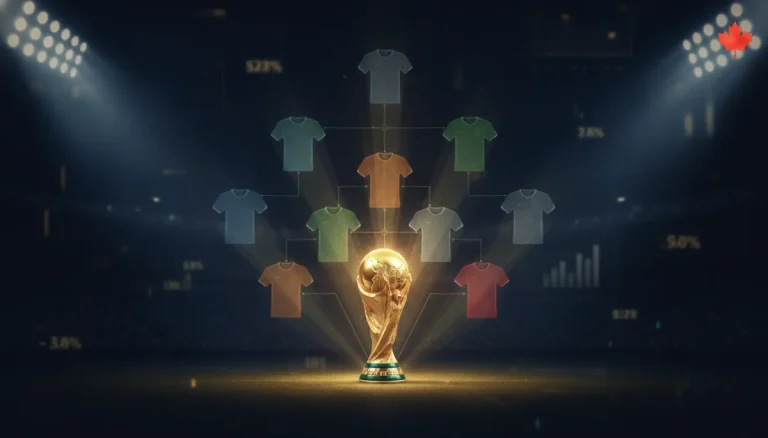
Two players now share first place: Klose and Messi, both on 16 goals. That shared lead is followed by Ronaldo Nazário on 15, Gerd Müller and Mbappé on 14, and Just Fontaine on 13. Beneath them are legends whose totals are still enormous by World Cup standards, including Pelé, Sándor Kocsis, and Jürgen Klinsmann.
The crowded middle of the chart is just as revealing. A group of players sits on 10 goals, which shows how difficult it is to stay healthy, productive, and relevant across multiple tournaments. The World Cup rewards not only brilliance, but also timing, endurance, and the rare chance to keep returning on the biggest stage.
Why Klose’s Record Endured So Long
Klose was never the most dazzling striker in the game, but he was one of the most dependable. He scored in four separate World Cups, opened his account with a hat trick against Saudi Arabia in 2002, and kept finding the right moments until Germany lifted the trophy in 2014.
What makes his total even more impressive is how efficiently he built it. He reached 16 goals in 24 matches, and his steady pace gave the record a sense of permanence. Klose did not chase headlines; he accumulated goals through movement, timing, and a sharp feel for where the ball would land.
Messi Turns the Chase Into a Live Story
Messi’s World Cup journey took years to resolve. Early exits, narrow defeats, and the pressure of expectation made his tournament record feel incomplete for a long stretch. Then Qatar changed the narrative, as he helped Argentina win the title and added seven goals to his total in 2022.
By 2026, Messi had reached Klose’s mark and created a new kind of tension at the top of the list. Every additional goal now pushes him into untouched territory, and that is exactly why this record has become one of the most compelling threads in the tournament.
The Chasers Who Still Matter
- Ronaldo Nazário remains one of the most efficient scorers in World Cup history, with 15 goals in only 19 matches.
- Gerd Müller reached 14 goals in just two tournaments, a strike rate that still stands out decades later.
- Kylian Mbappé enters the current era with 14 goals and more prime years ahead than any of the players above him once had.
- Just Fontaine holds the single-tournament record with 13 goals in 1958, a mark that still looks almost impossible to challenge.
That sequence matters because it shows the different ways greatness can appear. Ronaldo mixed flair with ruthless finishing, Müller made every chance feel dangerous, Mbappé combines speed with elite finishing, and Fontaine’s one-tournament eruption remains one of the most astonishing scoring bursts in any major competition.
What Makes This List So Hard to Crack
The World Cup is not a club season. Opportunities are limited, the field is stronger, and the tournament space between a breakthrough and a heartbreak is tiny. A player can be brilliant for a month and still leave with only three or four goals, which is why totals above 10 are so rare.
That is also why the current generation draws so much attention. Messi already has the title, Mbappé still has time, and other established scorers such as Cristiano Ronaldo, Harry Kane, and Neymar have all remained part of the broader conversation. The list is not frozen; it is simply difficult to move.
Why the Race Still Feels Open
This record has changed because the modern game keeps producing attackers who can stay dangerous for longer. Better sports science, deeper tournament runs, and more opportunities across multiple World Cups have all created a setting where the old limits no longer feel fixed.
Even so, the margin for error remains tiny. One injury, one early exit, or one quiet tournament can stall a run for years. That is why Klose’s 16 stayed safe for so long, and why Messi’s equalizer matters so much: it shows that the most sacred World Cup number is now in play again.
For the moment, the chase belongs to the superstars at the top and the next wave trying to join them. The record is no longer a closed chapter, and that alone makes every goal matter more.