How 2026 Match Laws Could Reshape the World Cup

The 2026 FIFA World Cup is expected to feel different not just because of its expanded field, but because referees and players will work under a fresh set of match laws. The changes are designed to quicken play, limit delay tactics, and give officials sharper tools in high-pressure moments.
For fans, that means a tournament where restarts, substitutions, protest behavior, and video review may all look a little different from what they are used to. For teams, it means preparation will matter as much as talent.
Why the Lawbook Is Changing
Football’s rule makers have been under pressure to reduce time wasting, improve discipline, and make key decisions easier to police. The 2026 World Cup gives them a massive stage to put those ideas into practice.
That matters because tournament football is unforgiving. A single delayed restart, a needless confrontation, or a poorly timed protest can now carry consequences that are more immediate and more severe than before.
The Biggest Discipline Shift
One of the most attention-grabbing updates concerns players who cover their mouths during confrontations. Under the new approach, a player who hides their mouth with a hand, shirt, or arm in a tense exchange may be shown a red card if the referee believes the gesture is being used to conceal abusive or discriminatory language.
This is not aimed at harmless chatter. The focus is on situations where tempers are high, accusations of misconduct are possible, and officials need a clearer way to address behavior that may be hidden from view.
What referees are watching for
- Arguments between opponents
- Moments where language may be abusive or discriminatory
- Attempts to prevent cameras or officials from seeing what was said
- Behavior that suggests a player is trying to conceal misconduct
The practical effect is simple: players will no longer be able to assume that covering their mouths creates protection from punishment. That alone could change how confrontations unfold across the tournament.
Walk-Off Protests Carry Serious Risk
Another major change targets protest walk-offs. If a player leaves the field to object to a referee’s decision, the referee may issue a red card. Coaches and team officials who encourage that kind of protest can also be sanctioned.
The goal is to stop teams from using mass exits or symbolic departures as a pressure tactic. If the situation escalates far enough that a match cannot continue, the team responsible could lose by forfeit.
Why this matters in a tournament setting
In a global event, protests can spread quickly and become a distraction. The updated rule is meant to keep the match moving and remove ambiguity about what happens when frustration turns into organized disruption.
Countdowns for Restarts Will Be More Visible
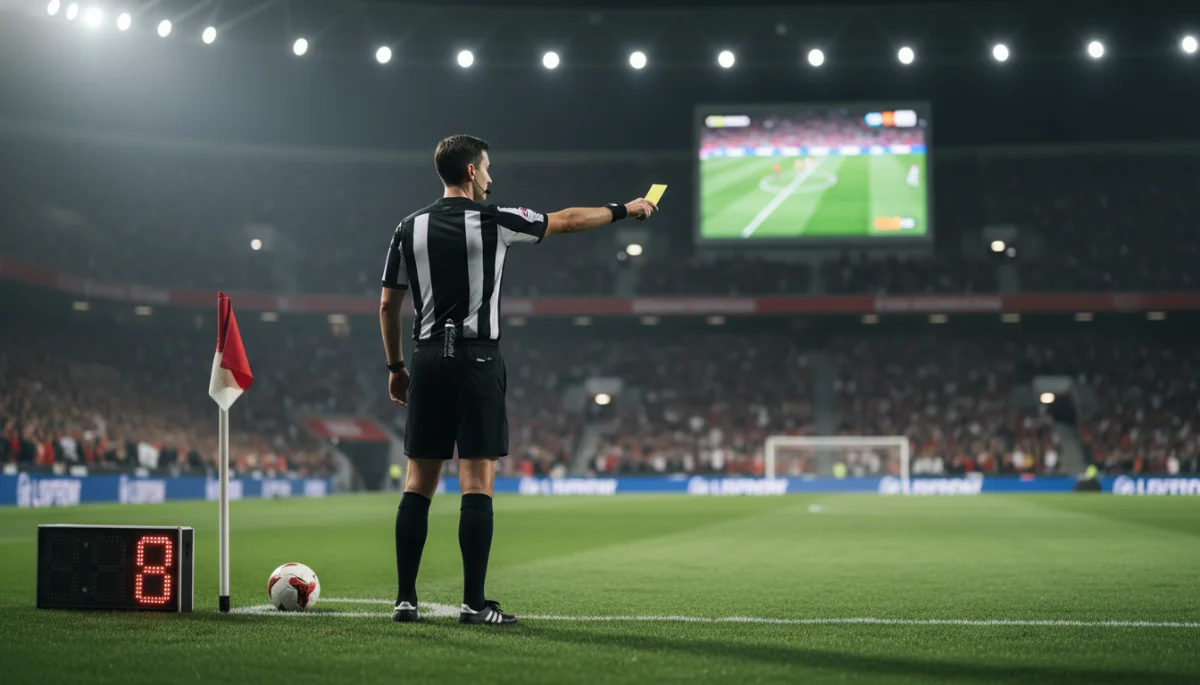
Fans who dislike slow throw-ins and drawn-out goal kicks should notice a difference right away. Referees will use a visible five-second countdown for certain restarts, creating a much tighter window for play to resume.
If the team in possession does not restart in time, the penalty depends on the restart. A delayed throw-in goes to the other side, while a goal kick taken too slowly can lead to a corner for the opposition.
What could happen in practice
- A throw-in that drags on too long is awarded to the other team
- A delayed goal kick can become a corner kick for the opponent
- Late-game time wasting becomes much riskier
- Goalkeepers and defenders will need to act faster under pressure
Those penalties are significant because they can flip field position, increase attacking pressure, and change momentum in a matter of seconds.
Substitutions Will Be More Efficient
Substitution management is also getting stricter. Once the board goes up, the player leaving the field will have only 10 seconds to get off, and they will need to exit at the nearest boundary point rather than wandering across the pitch.
That may sound small, but at elite level even a few extra seconds can be used to slow the game or create confusion. The new rule is meant to remove that advantage.
Possible consequences for slow changes
If the departing player does not leave quickly enough, the incoming substitute may have to wait. In some situations, that could leave the team briefly short after play resumes.
There are still sensible exceptions for injuries, safety concerns, and security issues, but ordinary delay will likely be treated much more strictly than before.
Medical Delays Get a One-Minute Penalty
Another change targets tactical treatment breaks. If medical staff come onto the field to treat an outfield player, that player will generally have to leave the pitch for one minute once play restarts.
The point is to reduce the incentive to use minor knocks as a way to slow the match and reset the team shape. In other words, treatment should be about care, not game management.
When the one-minute rule does not apply
- Goalkeeper injuries
- Collisions between a goalkeeper and an outfield player
- Collisions between teammates that require treatment
- Serious injuries, including possible concussion or head injury
- A player who is about to take a penalty
These exceptions are important because they protect player welfare while still discouraging unnecessary stoppages. The rule is not meant to punish genuine medical needs.
VAR Will Have a Wider Safety Net
Video review is also set to play a larger role. VAR was introduced at the World Cup in 2018, and by 2026 it is expected to cover a few additional situations that have long been debated by players, coaches, and supporters.
That does not mean every close call will be reviewed. The idea is to fix clear errors quickly without turning every stoppage into a long replay discussion.
Areas where VAR may step in
- Clearly incorrect second yellow card decisions that lead to a red card
- Mistaken identity, such as booking or sending off the wrong player
- Some clearly wrong corner kick awards
- Fouls committed before a free kick or corner is actually taken
The mistaken identity rule is especially important because it prevents an innocent player from paying for someone else’s foul. The second-yellow review is equally notable because those decisions have often been beyond the reach of ordinary video intervention.
Set Pieces May Face More Scrutiny
Attacking free kicks and corners are often decided by small grabs, blocks, and nudges before the ball is live. Under the updated framework, some of those actions may receive closer examination if they occur before the restart is taken.
If an attacking player fouls a defender before the ball is in play, VAR may recommend an on-field review. If the referee agrees an offense occurred, the disciplinary outcome and the restart can be adjusted accordingly.
That could matter a great deal in matches where teams rely on rehearsed routines, near-post blocking, or physical movement to create an edge.
Every Match Will Include Hydration Breaks
Because the tournament will be played across the United States, Mexico, and Canada, heat management is a major concern. Each match is expected to include a three-minute hydration break in both halves.
The break is generally expected around the middle of each half, but referees will have enough flexibility to adjust the timing if another stoppage, such as a treatment break, happens around the same time.
That flexibility should help keep the match flowing while still protecting players in hot conditions.
No More Unofficial Coaching Huddles During Keeper Treatment
Goalkeeper injuries can create awkward pauses, and those pauses have sometimes been used for tactical instruction. The updated laws are meant to prevent that from becoming a hidden timeout.
If the goalkeeper is being treated on the field, neither team should be able to treat the stoppage as an opportunity for a sideline-style coaching meeting. The intent is to make the pause about medical care, not strategy.
What Teams Will Need to Adjust
These changes will reward teams that stay calm, organized, and disciplined. The days of casual delay tactics and hidden confrontations may be numbered.
Coaches will likely spend a lot of time drilling the new expectations before the tournament begins. That preparation could decide whether a team gains an edge or gives one away.
The habits most likely to change
- Slowing down throw-ins or goal kicks
- Using substitutions to run down the clock
- Turning small injuries into tactical breaks
- Confronting opponents in ways that invite disciplinary trouble
- Overusing set-piece physicality before the ball is live
Any side that relies on disruption as part of its identity will need to rethink that approach quickly. The new rules are clearly built to make such tactics more expensive.
What Supporters Will Notice First
Fans should see more visible refereeing at restarts and more immediate consequences for slow play. They may also notice stricter substitution management, faster restarts, and a few more VAR interventions than they are used to in similar situations.
Some calls may feel unfamiliar at first, especially if a throw-in changes hands or a goal kick turns into a corner because a team hesitated. Still, the broader goal is easy to understand: fewer interruptions, clearer accountability, and a faster match.
The Tournament Could Feel Sharper and More Controlled
The 2026 World Cup may still be defined by goals, upsets, and star performances, but the rule changes could shape the rhythm of the competition in a real way. Small decisions may now have larger consequences, and referees will have more tools to keep matches under control.
For teams, the message is straightforward: act quickly, stay disciplined, and avoid giving officials a reason to intervene. For fans, the tournament may look a little stricter, but it should also move with less waste and fewer needless interruptions.