How Montreal Let a Winnable Game Slip Away

The Montreal Canadiens appeared headed toward a convincing home victory Thursday night. They controlled much of the action, built a two-goal advantage and kept Nashville pinned in its own end for long stretches.
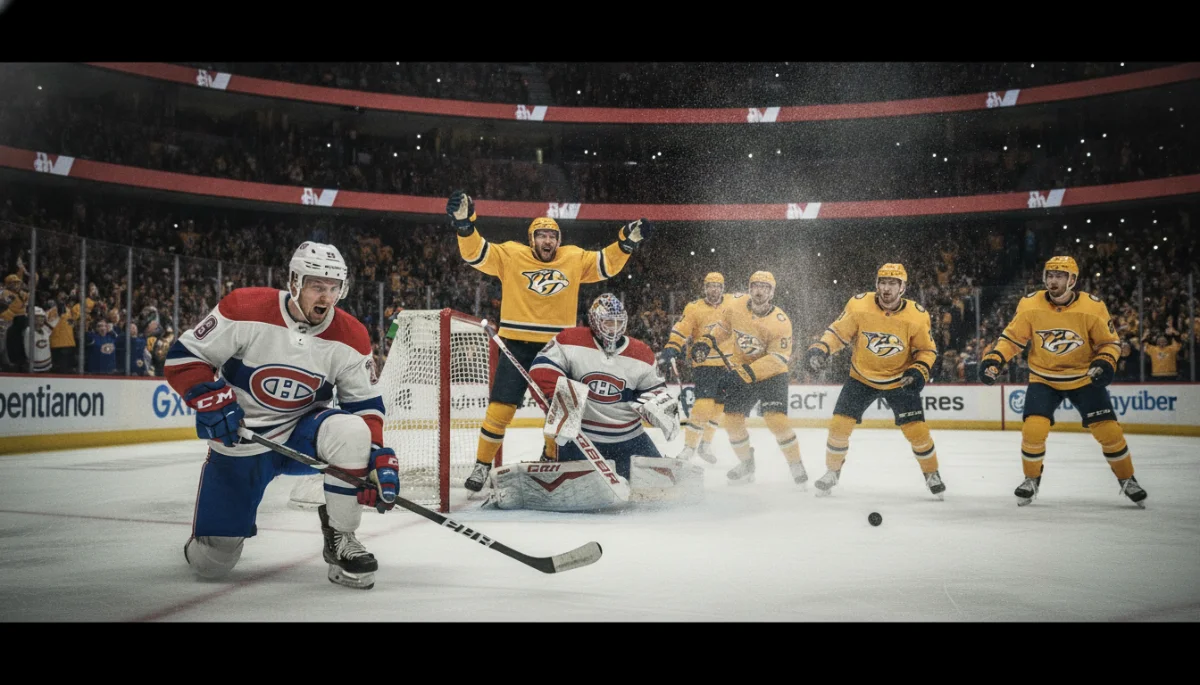
That strong start ultimately produced nothing in the standings. The Nashville Predators scored five consecutive goals, including Ryan O’Reilly’s late power-play marker, to erase Montreal’s lead and leave Bell Centre with a 5-2 win.
The defeat extended Montreal’s winless run to three games and moved the Canadiens to 1-2-1. The result was especially disappointing because the team did many things well before failing to convert its control into a complete performance.
A Two-Goal Lead Was Not Enough
Montreal spent most of the opening period establishing territorial control without finding the net. The Canadiens generated the cleaner offensive sequences and repeatedly forced Nashville to defend around Juuse Saros.
The breakthrough came 3:12 into the second period. Nick Suzuki located a loose puck near the crease during four-on-four play and slipped it past Saros for his third goal of the season.
Montreal added another goal at the 8:50 mark. Alex Newhook finished Josh Anderson’s setup after a sustained shift in Nashville’s zone, giving the Canadiens a 2-0 cushion.
At that stage, the game seemed to be following Montreal’s script. The home team had the energy, the crowd behind it and enough possession to make the Predators look uncomfortable.
The issue was that the Canadiens never created the separation their performance seemed to demand. They had opportunities to build a three- or four-goal margin, but Saros kept Nashville within reach.
Saros Kept Nashville Alive
Montreal’s inability to finish became more damaging as the game progressed. Saros turned aside 32 shots, including several important chances during the Canadiens’ strongest stretches.
The Nashville goaltender’s work prevented the game from becoming one-sided on the scoreboard. Montreal could dictate play for several minutes, yet the Predators remained one successful sequence away from changing the mood inside the arena.
That sequence arrived late in the second period. Alexander Kerfoot redirected a shot past Jacob Fowler with 4:54 left in the frame, cutting the deficit to 2-1.
Nashville then delivered an even greater blow before intermission. Matthew Wood scored on the power play with only 32 seconds remaining, sending the teams into the second intermission tied at 2-2.
The timing mattered as much as the goal itself. Montreal had spent much of the night looking like the stronger club, but the late equalizer erased its advantage and gave Nashville renewed belief.
Special Teams Decided the Final Stretch
The Predators’ comeback was built largely through their power play. Their tying goal came with the man advantage, and another Montreal penalty later gave Nashville the chance to take its first lead.
With the score level in the third period, Mike Matheson was penalized for tripping Steven Stamkos. Nashville needed only one quality sequence to punish the mistake.
At 3:16 remaining, Roman Josi’s point shot reached O’Reilly, who redirected it past Fowler for a 3-2 lead.
The goal was Nashville’s first advantage of the night and the defining moment of the comeback. Montreal had largely avoided being overwhelmed at even strength, but its penalty trouble created the openings the Predators needed.
Montreal’s own power play did not provide an answer. In a close game against a goaltender playing confidently, the Canadiens needed their special teams to produce. Instead, Nashville gained the decisive edge in that area.
One Missed Breakaway Summed Up Montreal’s Night
Before O’Reilly’s goal, Montreal had an excellent chance to reclaim the lead. Josh Anderson broke in alone with roughly eight minutes left in regulation, creating the kind of opportunity that can determine a tight game.
Saros stopped the attempt with his left pad. Had Anderson scored, Montreal would have regained a 3-2 lead and forced Nashville to chase the game again.
Instead, the Predators survived, and the Canadiens never found another equalizer. A few minutes later, O’Reilly’s power-play redirect turned that missed chance into an especially painful memory.
The contrast between the teams was clear. Montreal created enough opportunities to win, but Nashville finished the most important ones. Saros made the necessary save, while the Predators converted when the game reached its most consequential moments.
Fowler’s Debut Should Not Carry the Blame
Jacob Fowler’s first start of the season came under difficult circumstances. The 21-year-old had been recalled from the Laval Rocket after Samuel Montembeault suffered a lower-body injury during Wednesday’s practice.
Fowler stopped 15 shots in his season debut. The final score may suggest a poor outing, but two of Nashville’s goals came into an empty net after Montreal pulled him late.
In practical terms, Fowler surrendered three goals while defending the net. He also faced a difficult workload because two of the most important Nashville goals came during power-play situations.
That does not mean every goal was unavoidable, and Fowler will likely want certain moments back. Still, assigning the loss primarily to the young goaltender would overlook Montreal’s larger problems: missed chances, untimely penalties and a failure to protect its lead.
The bigger question is what happens next. Montembeault had no clear return timeline immediately after the injury, leaving Fowler as a potentially important option earlier than expected.
Fowler is not entirely new to the NHL. Last season, he appeared in 17 games, recording a 9-6-2 record, a 2.43 goals-against average and a .908 save percentage. Those numbers provide Montreal with some reason for confidence if he must make another start.
The Score Hid a Competitive Performance
Nashville’s final two goals came into an empty net, with Adam Edstrom adding both markers in the closing minutes. That detail changes how the result should be evaluated.
Montreal was not beaten by three goals at five-on-five. The Canadiens controlled large portions of the game and finished with more offensive pressure, but they failed to turn that advantage into a decisive lead.
The loss therefore points more toward execution than a complete collapse in team play. Montreal needed to capitalize while Nashville was struggling, avoid giving the Predators power-play opportunities and close the second period without surrendering momentum.
Instead, the Canadiens allowed a 2-0 lead to disappear before the second intermission. Once the game became tight, Saros and Nashville’s special teams took control.
Suzuki Remains a Key Source of Offense
Nick Suzuki was one of Montreal’s brighter performers. His goal gave the Canadiens their initial breakthrough and brought his season total to three goals.
The captain’s willingness to attack the crease was particularly valuable. Montreal needs more plays that create disorder around the net, especially when opposing goaltenders are stopping shots from the perimeter.
Suzuki will remain central to the team’s response. The Canadiens have little time to dwell on the defeat, with Detroit scheduled to visit Bell Centre on Saturday.
What Montreal Must Correct Against Detroit
The immediate priority is finishing. A two-goal lead can disappear quickly in the modern NHL, so Montreal must make stronger use of its best chances when it controls play.
Discipline is equally important. Nashville’s power play produced both the tying goal and the late winner, making Montreal’s penalties directly relevant to the outcome.
The Canadiens also need to support whichever goaltender starts. Better puck management, fewer penalties, cleaner rebound coverage and less traffic in front of the net would make the assignment easier for Fowler or any replacement.
Montreal’s 1-2-1 record and three-game winless streak deserve attention, but they do not demand panic. The Canadiens showed enough against Nashville to suggest that the foundation of their game can work.
The next step is learning how to complete that kind of performance. Possession, pressure and early goals matter, but they only become valuable when a team protects its lead and executes during the decisive moments.